
Microwave defluorination uses dielectric-loss differences to heat PVDF selectively, removing fluorine from recycled black mass without affecting metal components; it saves 20–50% energy and complies with GB/T 45203-2024.
Microwave defluorination is key to upgrading recycled lithium-battery black mass. Using volumetric microwave heating and dielectric-loss differences, Innov-source selectively heats fluorine-containing binders such as PVDF without affecting metal components, saving 20–50% energy and meeting GB/T 45203-2024.
Microwaves span 300 MHz–300 GHz (1 mm–1 m wavelength); industrial bands are 2.45 GHz and 915 MHz. Unlike surface-inward resistance heating, microwaves heat particles internally and externally at once, greatly shortening cycle time.
Four Process Advantages
Volumetric microwave heating acts on the material directly, heating particles internally and externally at once.
High efficiency via selective PVDF heating without affecting metals; fast, simultaneous internal/external heating; 20–50% energy savings with lower carbon emissions; precisely controllable microwave power for automated continuous production.
Standard Requirements & Verification
Selective PVDF decomposition leaves metal components intact, with fast heating and automated continuous control.
GB/T 45203-2024 sets water-soluble fluorine at ≤ 0.1% for LFP and ≤ 0.4% for ternary materials. In defluorination trials on unfilled electrode scrap (recycled LFP), microwave treatment reduced soluble fluorine to 0.0025% versus 0.0863–0.1279% for tube furnaces, with better 1C capacity retention.
Engineering & Line Delivery
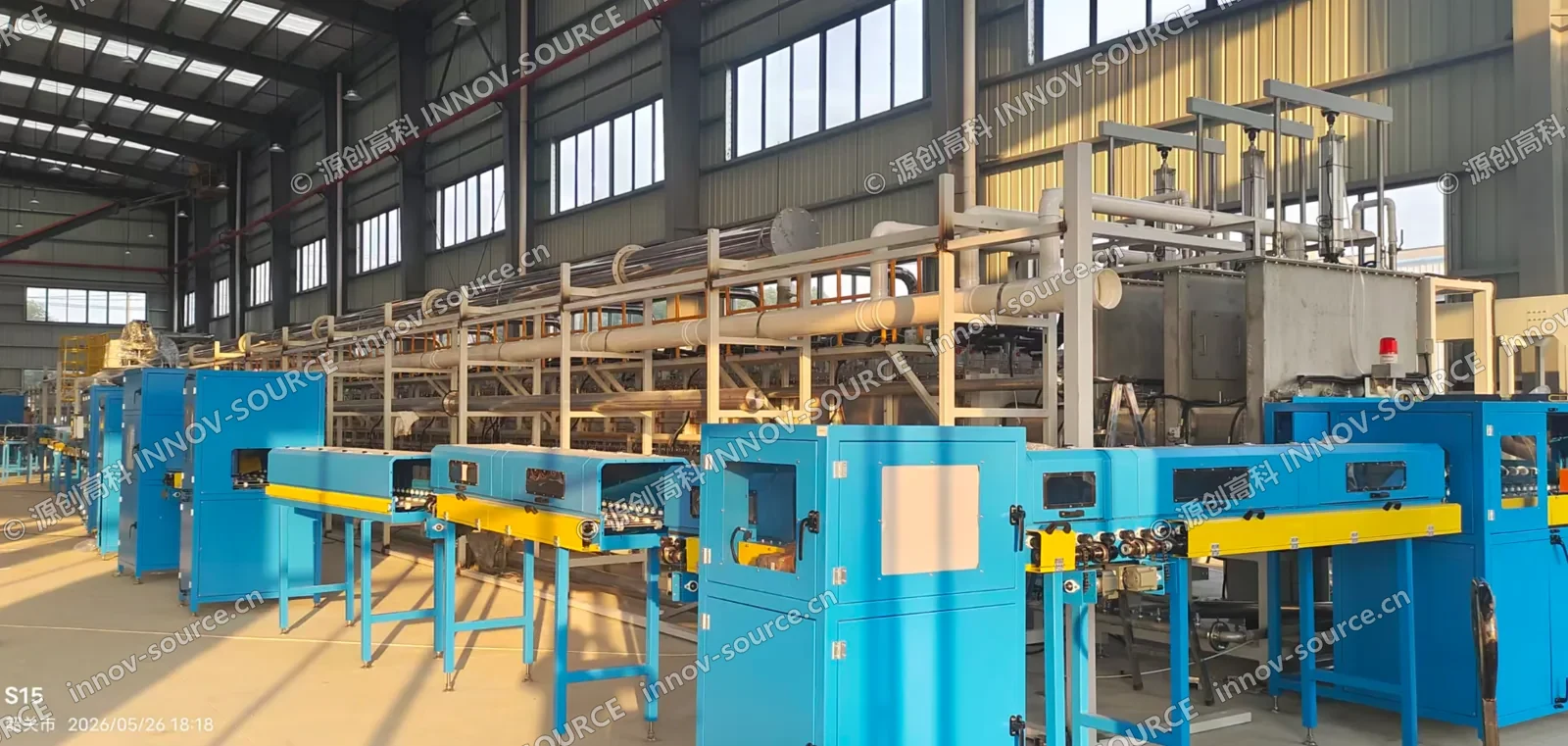
A 10,000-tonne line has been delivered, forming a dismantle–defluorinate–repair closed loop for standard-compliant black mass.
The technology has been engineered into a 10,000-tonne defluorination line covering design, 3D layout and installation. It interfaces with fine dismantling and electrode-material repair to form a dismantle–defluorinate–repair loop, supplying equipment and process support for standard-compliant black mass.